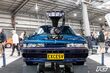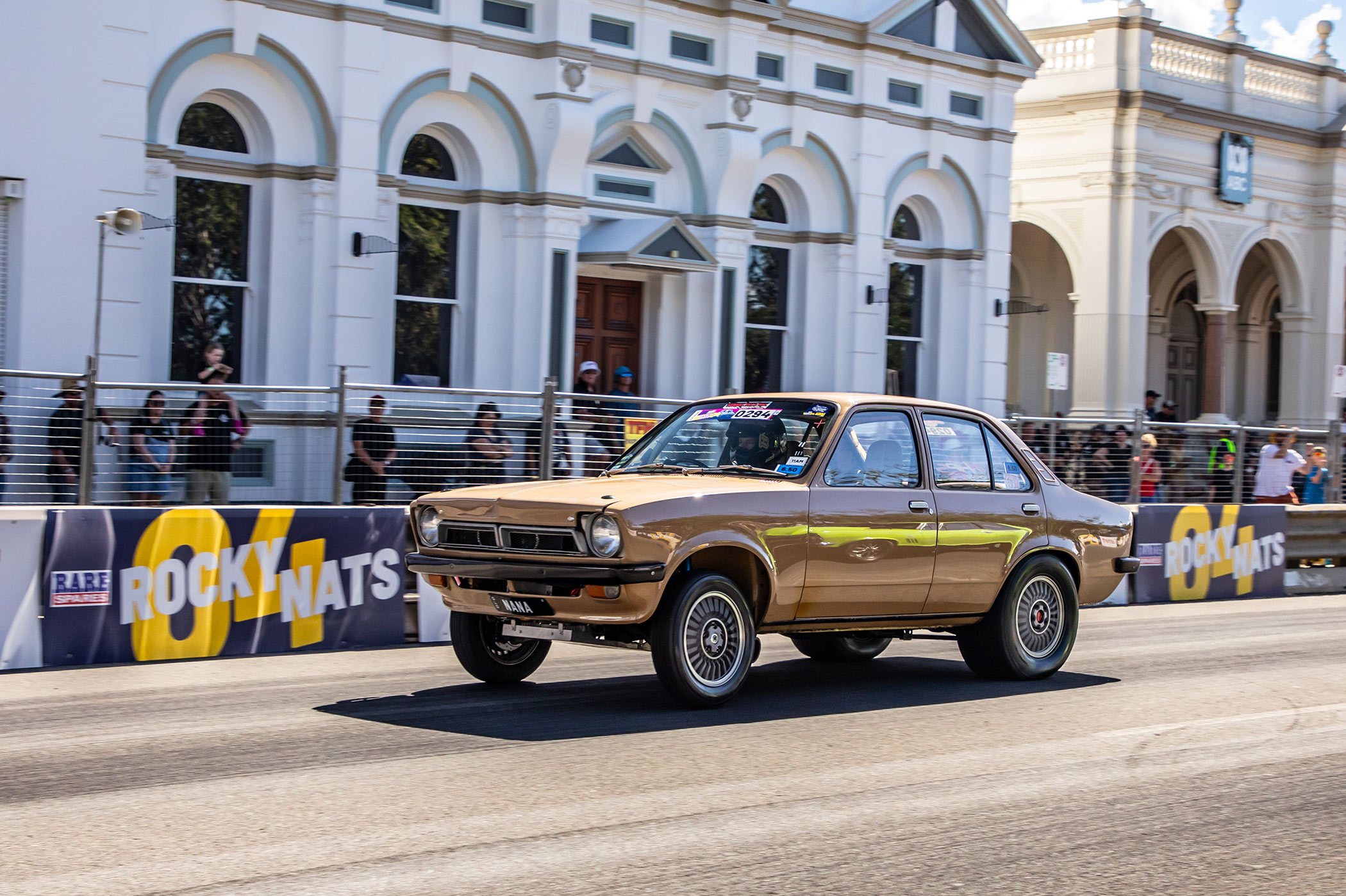
A Donor Car With Unfinished Business
Paul Butler bought the Gemini for parts. That was the plan. Strip it, sell the shell, move on. But the body was straight, the floor was solid, and somewhere between the second bolt and the third beer the plan changed. Paul dropped an SR20 in it instead.
Fast forward a few years and the beige two-door has won at Rockynats, Roll Racing Queensland, the Torque Time No-Prep Eighth-Mile, and the Oz Aid Kooralbyn Shootout. We first saw it at Rockynats running 325s on the rear and putting cars with twice the cubic inches on trailers. The thing about no-prep racing on the northern east coast is that the SR20 crowd is tiny. Most guys are running LS, Barra, or big-cube Holden sixes with boost. Paul turned up with a four-cylinder Japanese motor in an Australian shell and started collecting trophies anyway.
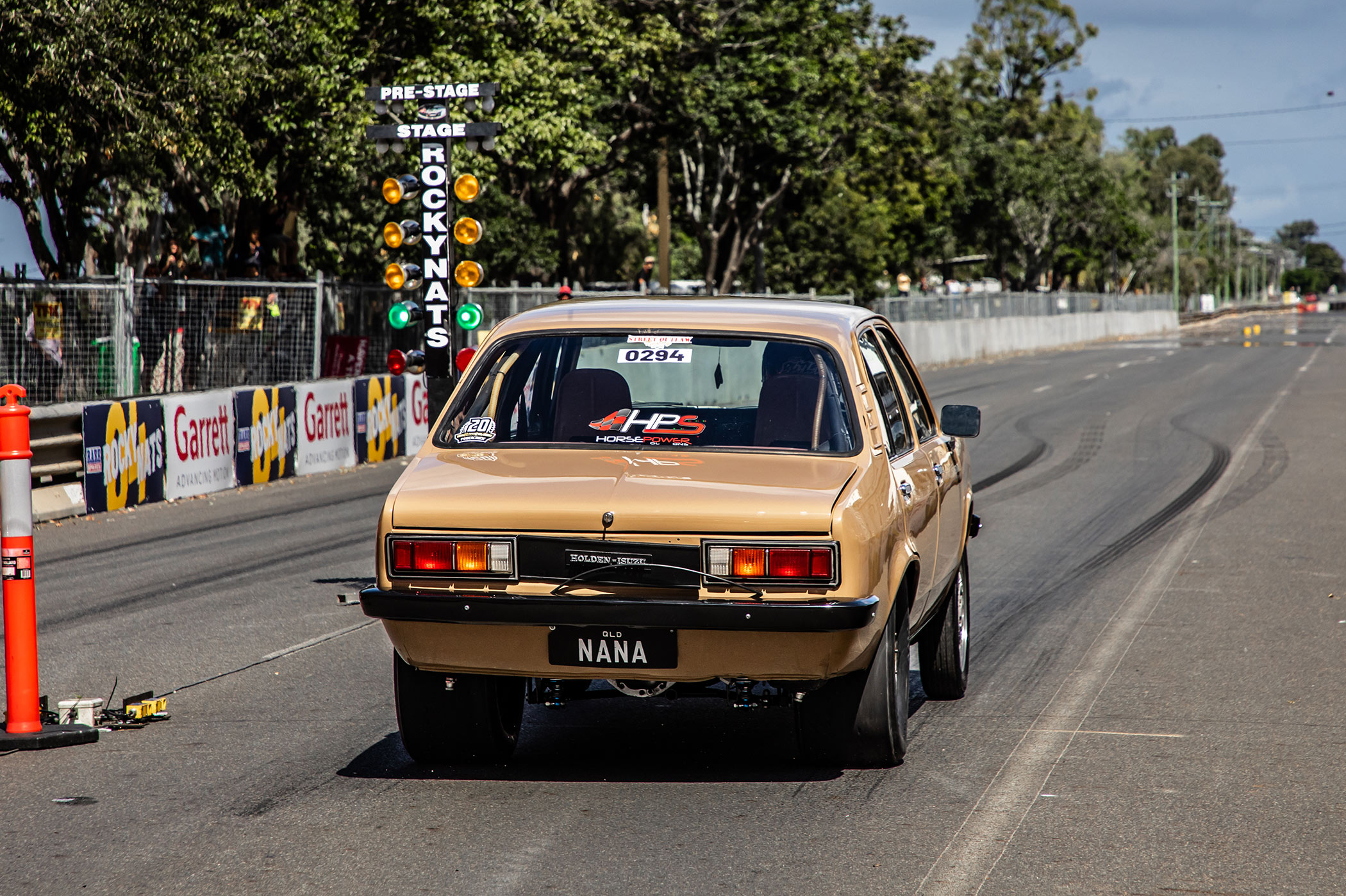
The car's nickname is Nana. Beige paint, four cylinders, looks like it should be parked outside a bowling club. Nobody laughs twice.
The Engine: 2.2 Litres of Problem Solving
Peter Phillips Performance Engines built the SR20. Stroked to 2.2 litres using a Nitto rotating assembly inside a sleeved block. That 200cc of extra displacement matters more than it sounds. On a turbocharged, nitrous-fed combination running north of 50 psi, each extra cc of swept volume multiplies through the pressure ratio. At 50 psi, 200cc becomes roughly 870cc of additional charge volume per revolution. Over an eighth-mile pass at 7,500 rpm, that is a meaningful amount of extra energy hitting the crank.
The head is the unusual bit. Paul went with a front-wheel-drive SR20DE item from a Nissan Pulsar. Not the rear-drive DET head that most SR builds use. The Pulsar head has smaller combustion chambers and a different port entry angle, which bumps the static compression slightly and improves air velocity at lower RPM before the turbo reaches full song. Custom camshafts match the valve events to the boosted operating range rather than the factory NA rev ceiling the head was originally designed for.
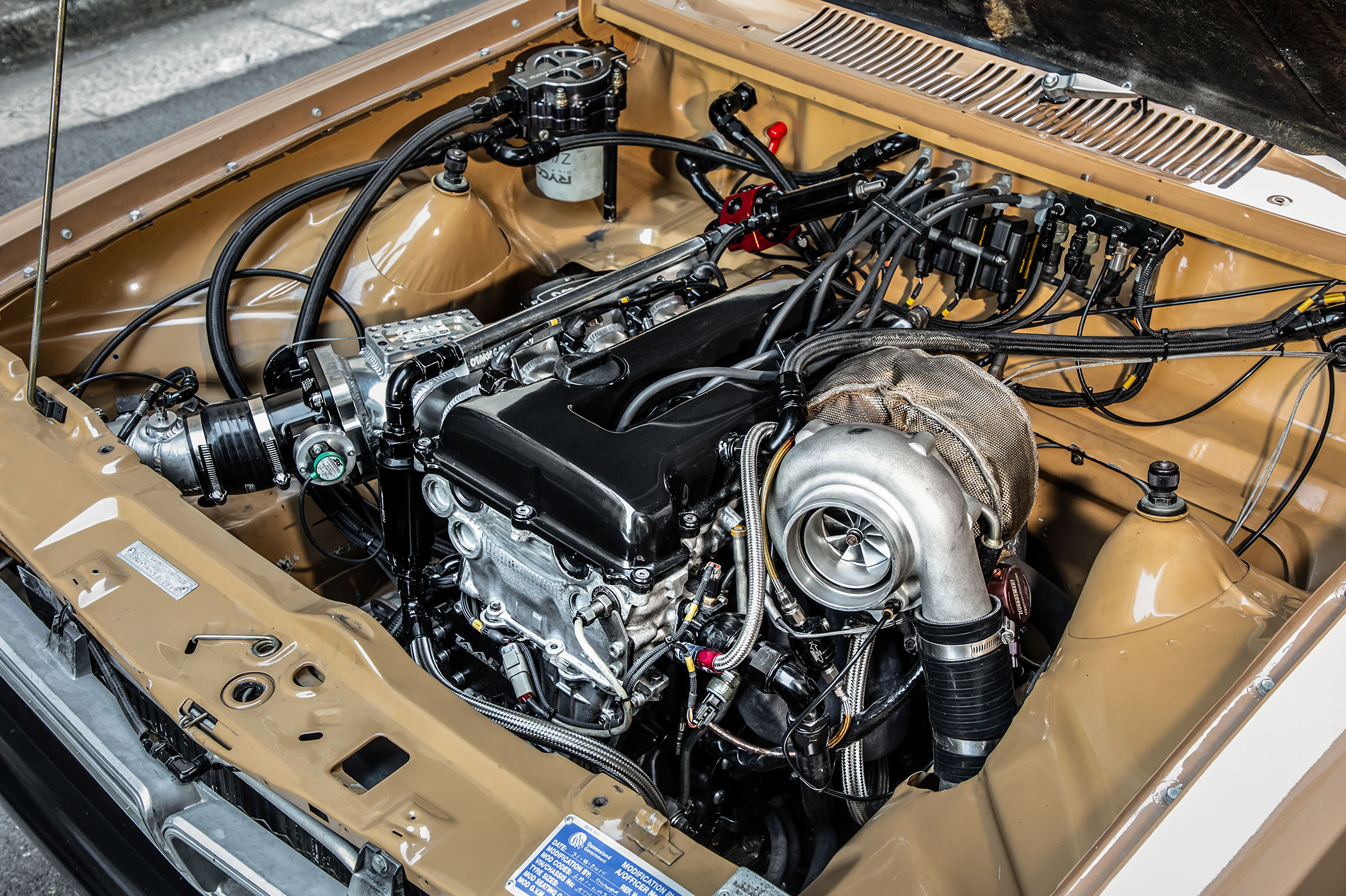
On the intake side, a modified Otaku Garage inlet manifold feeds the engine. Hot side runs 6boost piping into a Garrett G35-1050 turbocharger. At 50-plus psi through 2.2 litres, the G35-1050 is working deep in its map, but the compressor housing is sized well enough for this displacement that exhaust gas temperatures stay manageable for the length of a no-prep hit. A quarter-mile pass at Willowbank would hold the turbo at peak load for three to four seconds longer. That thermal margin becomes a real question.
Fuel is pump E85. Engine management is a Haltech Nexus R5. But the real kicker is the two-stage nitrous system layered on top of everything else. That is where the four figures come from. Paul's mate Justin Simpson at Horsepower Solutions tuned the whole combination, and the trophy haul says he got it right.
The SR20DE head from the Pulsar is smarter than it looks on a spec sheet. Most rear-drive SR20DET builds keep the factory turbo head because it bolts straight on. The DET head has larger combustion chambers (around 48-49cc versus the DE's 42-44cc), which drops static compression. That is fine on a stock turbo car, but once you are running 50 psi through a stroked bottom end, you want every fraction of compression you can safely carry because the turbo is doing the heavy lifting on volumetric efficiency anyway. The smaller DE chambers give Paul a slightly higher effective compression ratio under boost, which translates to better combustion efficiency and a sharper transient response off the line. On an eighth-mile pass where the first 60 feet decide everything, that response gap matters more than peak numbers.
The port angle is the other detail worth understanding. The DE intake ports enter the chamber at a slightly steeper angle than the DET, which creates more tumble at lower airflow velocities. On a naturally aspirated engine, that tumble helps burn quality at low RPM. On a boosted engine pushing 50 psi, the effect is less dramatic, but it does improve mixture homogeneity before the spark event, which is critical when you are spraying nitrous into the intake and need the fuel and oxidiser evenly distributed across all four cylinders. Uneven distribution at these pressures does not just lose power. It breaks things.
Speaking of nitrous. The two-stage system is doing double duty. Stage one fires off the line and loads the turbo faster by dumping extra exhaust energy into the turbine before the G35-1050 has reached full spool. In a no-prep eighth-mile, that shaves tenths off the 60-foot time, which is where these races are won. Stage two stacks additional power on top once the turbo is already at full boost and the engine can absorb the extra cylinder pressure without detonation. A single large shot applied from launch would dump maximum oxidiser into a cylinder that is still building boost pressure, and the result is a spike in cylinder pressure that the tune cannot react to quickly enough. Staged delivery smooths that transition.
Key number: At 50+ psi of boost with nitrous stacked on top, peak cylinder pressures in this engine sit somewhere around 1,800 to 2,200 psi depending on the nitrous stage. For reference, a standard SR20DET at 15 psi sees about 900 to 1,000 psi. The sleeved block and Nitto internals are not upgrades. They are structural requirements. Without them, the engine would not survive a full pass.
Drivetrain: Keeping It Simple Where It Counts
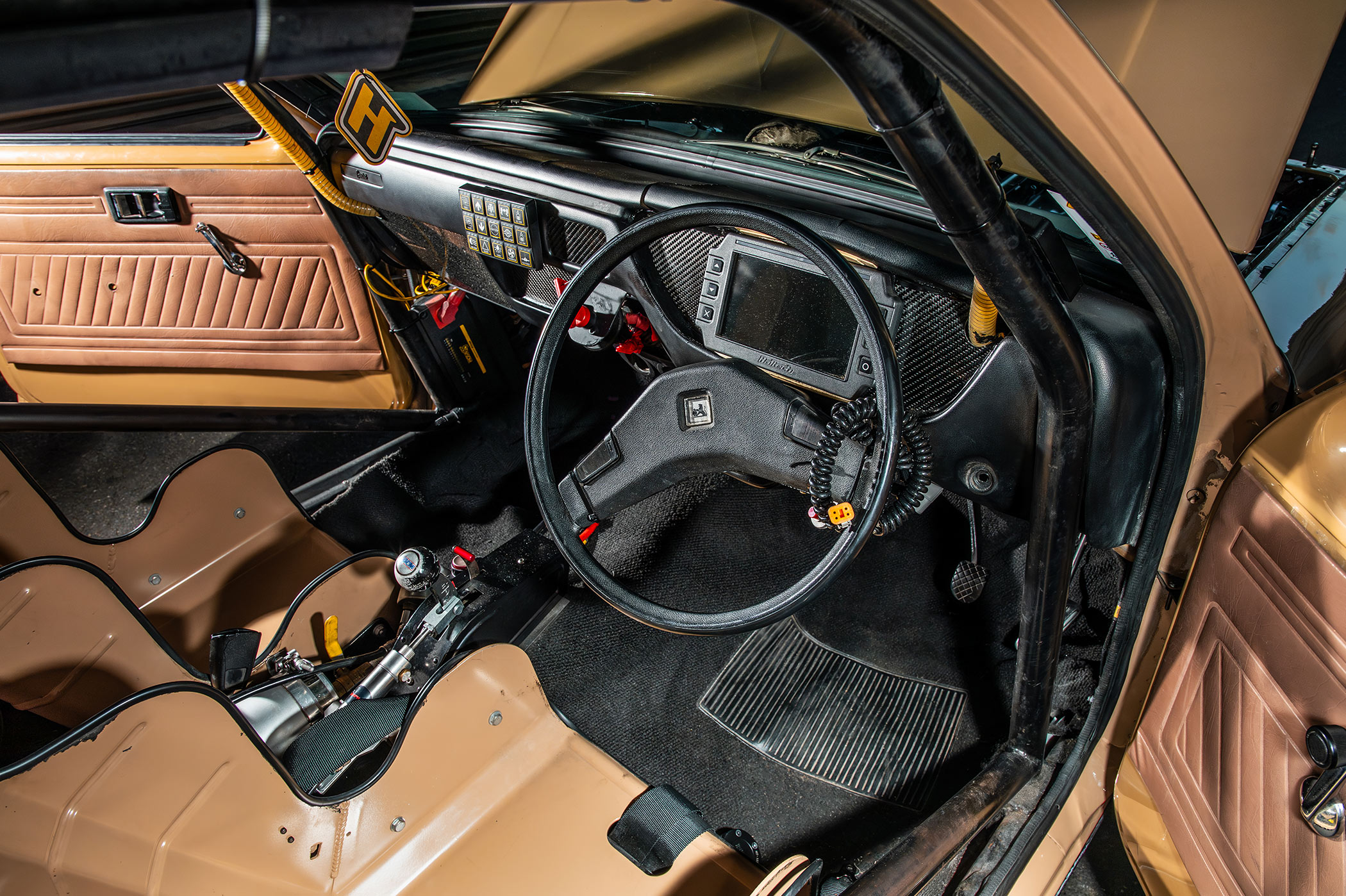
A Powerglide sits behind the SR20. Two speeds. No torque converter drama, no band adjustments, no hunting between ratios. In no-prep racing, the Powerglide's advantage is consistency. Every pass is the same shift point, the same converter flash, the same launch behaviour. That matters when the track surface changes between rounds and the only variable you want is tyre choice.
Power goes through a Borgwarner differential with full-floating axles and 4.11:1 gearing. The full-floating setup takes side-load off the axles during launches, which on an unprepped surface with a 1000hp hit is the difference between a straight pass and a broken stub. Paul rotates tyre sizes depending on the event format. For no-prep eighth-mile, he runs smaller rubber for quicker spool and faster 60-foots. At Rockynats, the car swallowed 325s and still hooked.
Engine: SR20, stroked to 2.2L by Peter Phillips Performance Engines. Sleeved block, Nitto rotating assembly, Nissan Pulsar SR20DE head (FWD), custom ground camshafts.
Induction: Modified Otaku Garage inlet manifold, 6boost exhaust piping, Garrett G35-1050 turbocharger, two-stage nitrous oxide system.
Management and Fuel: Haltech Nexus R5 ECU, pump E85, tuned by Justin Simpson at Horsepower Solutions.
Drivetrain: Powerglide automatic, Borgwarner differential, full-floating axles, 4.11:1 final drive.
Output: 1000+ hp at the hubs on 50+ psi boost with nitrous active.
Tyres: Rotated by event. Up to 325-width rears (Rockynats). Smaller radials for no-prep and eighth-mile.
The Trophy Run
Worth listing what this car has actually won, because the spread tells the story. Rockynats is a big-stage event with national-level competition. Roll Racing Queensland is a standing-start format that favours torque and traction. The Torque Time No-Prep Eighth-Mile is exactly what the name says, and the Oz Aid Kooralbyn Shootout is a charity event that still attracts serious cars. Different formats, different surfaces, different tyre requirements. Paul and the Gemini have figured out all of them.
What stands out is that none of these wins came on a prepped surface. The Gemini has never run a proper quarter-mile pass on a prepped track. Every result has been eighth-mile or no-prep.
What Happens When Willowbank Opens
Once Willowbank opens, we'll head there with some 235 radials and see what it can do, and we'll have a crack at a Kenda round as well.
Paul Butler, ownerWillowbank changes the equation for this car. A prepped surface gives consistent traction, which means the Powerglide can launch harder, the nitrous can fire earlier, and Paul does not have to manage wheelspin for the first hundred feet. On 235 radials, the contact patch is smaller than the 325s he ran at Rockynats, but on a prepped track the compound hooks differently because the rubber actually bites into the surface preparation rather than skating on dust.
The real question is thermal management over a full quarter. The G35-1050 has been doing its work in eighth-mile passes, where it is on boost for roughly four to five seconds. A quarter-mile pass at Willowbank doubles that. EGTs climb, intake temps climb, and the nitrous has to do its work across a longer window. Justin Simpson's tune will need to account for that. A motor making 1000hp at the hubs through 2.2 litres has very little margin for error when the turbo sits at peak load for eight seconds straight.
If the car hooks and the tune holds, a mid-to-low nine-second pass is genuinely on the cards. Lighter cars with similar power-to-weight numbers have gone quicker, but the Gemini has never had the opportunity to prove itself over the full distance. That first Willowbank timeslip will tell us a lot about where the ceiling is.
A PARTS CAR THAT MAKES 1000 HORSEPOWER AND HAS NEVER SEEN A PREPPED QUARTER
Photos: Ashleigh Wilson